


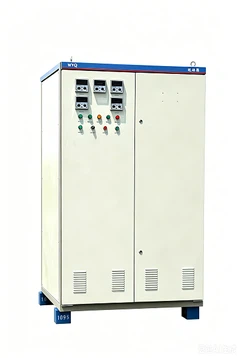
When customers reach out to us at Worldwide Electric for low-voltage (LV) and medium-voltage (MV) panels, one of the most common questions after basic performance specs is about lightning protection. It makes sense-lightning surges are a silent, destructive threat that can fry circuit boards, burn out transformers, and shut down entire facilities before anyone even realizes a storm is nearby. Electrical specifiers often treat LV and MV lightning protection as interchangeable, and that is a costly mistake. To set the record straight, let's break down the key differences, why they matter, and how we tailor our solutions at Worldwide Electric to meet each panel's unique needs.


First, it helps to ground ourselves in what we mean by LV and MV here. According to industry standards, LV panels handle voltages up to 1,000V, powering lighting circuits, office equipment, small motors, and residential or light-commercial systems. MV panels step up to 1,000V to 35,000V, serving industrial machinery, large manufacturing plants, data center backbones, and utility distribution networks. You can explore our full range of offerings in this space by checking our LV and MV Switchgear page, which lays out how we engineer these systems to handle everything from routine load changes to extreme events like lightning.
The first core difference in lightning protection boils down to the scale of the surge they're designed to handle. A lightning strike doesn't just send a single jolt- it generates an impulse current that can range from 10kA to over 200kA, depending on how far the strike is from the facility and whether it hits a power line or a structure's rooftop. For LV panels, the goal isn't necessarily to absorb a massive direct strike; most surges reaching an LV system come from indirect strikes-nearby bolts that induce current in overhead power lines, or surges traveling from the grid upstream. That means LV lightning protection is focused on limiting voltage to safe levels for sensitive electronics. We typically install metal oxide varistors (MOVs) in LV panels, which are small, affordable components that act like a pressure release valve: at normal operating voltages, they act as insulators, but when a surge hits, they conduct excess current to ground instantly, clamping voltage to a level that won't damage downstream devices. For context, an LV panel might be rated to handle a surge of up to 5kA to 10kA-enough to neutralize most indirect strikes-with clamping voltage set around 1,200V for a 120V/240V system, for example.
MV panels, on the other hand, face a far bigger challenge. Direct lightning strikes on distribution lines or substation equipment are a real risk, and even indirect strikes can generate surges that reach 50kA or more. That means MOVs alone aren't enough here-they'd burn out instantly under MV's higher energy loads. Instead, MV panels rely on a combination of surge arresters (often called lightning arresters) and proper grounding systems engineered for high-voltage stress. These arresters are larger, built with materials like silicon carbide or zinc oxide that can handle extreme current loads, and they're positioned at strategic points in the MV system-usually at the incoming line, before the transformer, and at key distribution nodes-to intercept surges before they can propagate through the system. For perspective, an MV arrester might be rated to handle 20kA to 100kA, with a clamping voltage matched to the MV system's rating (e.g., 15kV clamping voltage for a 12kV distribution system). If you want to dive deeper into how these components integrate, check our Lv Mv Panels page, which includes technical diagrams of our lightning protection layouts for both voltage classes.
Next up: grounding design, a make-or-break part of lightning protection that differs drastically between LV and MV systems. For LV panels, grounding is often a simpler, cost-effective setup. Most residential and small-commercial LV systems use a single-point ground connected to a building's structural steel or a local ground rod, with a resistance target of no more than 5 ohms. The focus here is on providing a low-resistance path for excess surge current to dissipate, and MOVs work in parallel with this ground to redirect spikes. But MV grounding is far more complex, because high-voltage surges can cause ground potential rise (GPR)-a dangerous phenomenon where the ground near a strike jumps to thousands of volts, creating a risk of electrocution for anyone near the system, and damage to equipment that's grounded at different points. For MV panels, we install a dedicated, low-impedance grounding grid made of copper or galvanized steel buried deep in the earth, often with multiple ground rods spaced 10 to 20 feet apart to spread the current. We also use isolated ground buses in some MV setups, which prevent surges from traveling through shared ground connections between panels. A practical example: a plant that used an LV-style ground on MV panels experienced a GPR event during a thunderstorm that damaged three transformers and halted production. The fix was to redesign the grounding grid to meet IEEE 142 for industrial MV systems, after which no further lightning-related outages occurred. If you're looking for more context on manufacturers specializing in high-quality, compliant systems, our Medium Voltage Switchgear Manufacturers page lists our production process and quality checks for all components, including lightning protection hardware.
Another key distinction is compliance with industry standards. LV lightning protection is mostly governed by NEC Article 285, which sets requirements for surge protective devices (SPDs) in low-voltage systems. It's relatively prescriptive, with clear rules for where SPDs must be placed (at service entrances, on branch circuits for sensitive gear) and what their voltage ratings should be. MV, though, follows a different set of standards: IEEE C62 for surge arresters, IEC 60099 for high-voltage surge protection, and specific utility standards for distribution systems. These standards are stricter because MV systems carry enough voltage to cause fatal damage even with a small surge. For example, an MV arrester must pass a 10kA impulse current test, while an LV MOV only needs to pass a 1kA test. That's why you can't just swap an LV SPD into an MV panel-trying to make that change would violate standards and create a major safety hazard. If you're specifying MV systems for utility or industrial use, make sure your supplier uses components certified to these standards, not just "off-the-shelf" parts. Our Middle Voltage Switchgear offerings all come with third-party test reports for lightning protection, so you can be sure they meet all required codes.
Another point is maintenance, which is a part of lightning protection that many customers overlook. LV panels' MOVs wear out over time, especially after every surge they absorb. Most MOVs have a lifespan of 5 to 10 years, depending on how many surges they handle, and they need to be tested regularly to make sure they're still functional. MV arresters also need testing, but their maintenance is more involved. Because MV systems are energized at high voltages, technicians can't just open the panel and check them like they would an LV SPD-they need to use insulated testing equipment to measure leakage current, check for damage from dust or moisture, and ensure the grounding grid is still intact. One common issue we see with MV panels is moisture buildup in the arrester housing, which can lower its insulation rating and make it ineffective during a storm. That's why we design all our panels-both LV and MV-with sealed enclosures and moisture sensors to catch those issues early. If you're in the market for turnkey panels with integrated maintenance support, our Medium Voltage Switchboard solutions include ongoing monitoring services to track lightning protection component performance between scheduled inspections.
A common question is: what happens if I mix up LV and MV lightning protection? The short answer is expensive, dangerous consequences. Fitting LV-rated MOVs into a 10kV MV panel to cut cost is a recurring field error. When a surge arrives, LV MOVs on an MV circuit can fail instantly. Without a properly rated path to ground, the surge travels along the bus bars and can damage the transformer and connected equipment, leading to unplanned downtime and replacement cost. That's the kind of mistake that comes from not understanding the core differences. At Worldwide Electric, we do more than supply panels-we work with you to assess your facility's location, size, and risk profile. If your facility is in a thunderstorm-prone area (like the Southeast U.S. or parts of Central Europe), we recommend a higher-rated arrester for MV panels or an extra layer of MOVs for LV panels. If your equipment is sensitive (like data centers or pharmaceutical labs), we coordinate with your team to add transient voltage surge suppressors (TVSS) that provide even more granular protection.
In summary: yes, there are clear, non-negotiable differences in lightning protection for LV and MV panels. LV systems rely on small, cost-effective MOVs for indirect surges, with simple grounding focused on clamping voltage for sensitive electronics. MV systems use heavy-duty arresters, complex grounding grids, and standardized testing to handle massive direct and indirect surges that could destroy equipment or cause harm. The key takeaway is that one size does not fit all-skimping on lightning protection for MV panels, or using MV components in an LV system, is a risk that's not worth taking.
If you're specifying panels for your next project, whether it's a small commercial building or a large industrial plant, we help you design a lightning protection system that's tailored to your needs. We walk through your site's risk assessment, review component options, and ensure all work complies with local and international standards. Don't let lightning be the next surprise that derails your operations-reach out to our team today to start a conversation about your LV and MV panel needs.
For panel specifications and surge-protection options, see our medium voltage switchgear and low voltage switchgear ranges, or contact our engineering team with your single-line diagram for a review.
References
- National Electrical Code (NEC) Article 285: Surge Protective Devices (2023 Edition)
- IEEE C62 Series: Standard for Surge Arresters for AC Power Systems (2022)
- IEC 60099-4: Surge Arresters – Part 4: Metal Oxide Surge Arresters Without Gaps for AC Systems (2021)
- Fuchs, A., & Heising, C. (2019). Lightning Protection for Electrical Systems: A Guide for Industrial and Commercial Applications. CRC Press.
- U.S. Department of Energy (DOE). (2020). Lightning Protection Guidelines for Medium Voltage Distribution Systems. Office of Electricity Delivery and Energy Reliability.