


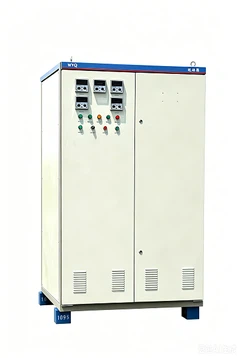
A common question from engineers and project managers is what the safe temperature rise limit is for low and medium voltage panels. The answer depends on the standard applied, the insulation and conductor materials used, and the ambient conditions at the site. This guide explains how temperature rise limits are set and how to apply them when specifying LV/MV panels.
Temperature rise in LV/MV panels refers to the increase in internal temperature above the ambient air temperature (typically 40°C, per global standards), caused by electrical resistance, copper losses in buses, dielectric losses in insulation, and stray currents. Ignoring temperature rise can lead to insulation degradation, overheated connections and, in extreme cases, fire. Components should be selected to stay within the limits of the applicable standard while allowing for the site conditions, from factories to commercial buildings in hot climates.
The limits come from the equipment standards. The International Electrotechnical Commission (IEC) is the leading body for LV/MV equipment standards, and its IEC 60439 series (covering low-voltage switchgear and controlgear assemblies) and IEC 62271 series (for high-voltage and medium-voltage switchgear) set specific temperature limits for parts of the panel. For example, copper busbars have a maximum allowable temperature of 75°C, while insulated materials like PVC or XLPE have lower limits-PVC caps at 70°C, XLPE at 90°C. Translating that to temperature rise: if ambient is 40°C, the maximum rise for a copper bus would be 35°C (75 – 40), and for PVC insulation, 30°C (70 – 40).
In practice, many installations in regions with high ambient temperatures, such as Southeast Asia, parts of Africa and southern Europe, see ambient temperatures above 40°C, sometimes reaching 50°C in summer. The allowable rise must then be reduced: if ambient is 50°C, a copper busbar can rise only 25°C (75 – 50) rather than 35°C. Busbar sizing, ventilation and heat dissipation should be adjusted so the component temperature stays below the limit even at peak load.


Temperature rise also interacts with the systems our LV/MV panels are part of. LV/MV panels connect to switchgear, ring main units (RMUs) and other distribution equipment, and a component that runs too hot can degrade adjacent parts. A panel with excessive temperature rise, for example, can shorten the life of a nearby electrical ring main unit. The Low & Medium Voltage Switchgear range follows the same temperature-control principles.
Material quality is equally important. Low-grade copper or insulation has higher resistance and generates more heat, creating a cycle of rising temperature and faster material wear. Oxygen-free copper busbars offer lower resistance and better thermal conductivity, and flame-retardant insulation keeps its properties at elevated temperatures, giving consistent performance over the life of the panel.
Temperature rise testing is carried out before panels leave the factory. Continuous overload conditions are simulated in a controlled chamber, temperatures measured at busbars, terminals and insulation, and the results checked against IEC limits. The test is a way to catch design flaws such as localized hot spots before installation.
Regional standards vary. NEMA in the United States sets similar temperature rise limits, while some Asian regions apply more conservative limits for panels in densely populated areas. Custom panels should therefore be designed around the site location, load and ambient conditions rather than a single default. For MV equipment, see the medium voltage switchgear range, where thermal performance is part of the design criteria.
A common misconception is that some extra heat is normal under heavy load. In fact, sustained operation above the rated temperature accelerates insulation ageing and shortens service life. Load demand and site conditions should be calculated so the panel operates within its limits, and thermal imaging can be used to monitor temperatures as part of preventive maintenance.
Demand is growing for panels that not only meet the basic limits but also manage heat more efficiently. Designs such as ventilated busbar chambers and heat sinks for high-current components reduce temperature rise without increasing panel size, suiting both compact commercial spaces and large industrial facilities. Advances in thermal engineering are also visible in metal-clad medium voltage switchgear.
Another angle is regulatory compliance. Many countries require third-party certification for LV/MV panels, and temperature rise testing is a core part of that process. Panels built to IEC, NEMA and other applicable standards give buyers confidence that local codes are met. Non-compliant equipment can cause project delays, fines or safety hazards, so specifications should be checked against both thermal limits and regulatory requirements, whether for an LV panel in an office building or an MV panel in a distribution station.
The practical effect of temperature rise limits is easiest to see at high ambient temperatures. A panel with a 40°C rise installed where ambient reaches 48°C would push internal copper to 88°C, above the 75°C limit. Specifying larger busbars and improved ventilation can reduce the rise to around 28°C, keeping copper near 76°C even at 48°C ambient. That is why ambient conditions must be stated when a panel is specified.
Material research and testing methods continue to develop, and panel designs should be reviewed against current standards as they change. Specifying a little margin below the limit leaves room for future requirements and for variations in site conditions.
In summary, under standard conditions (40°C ambient) the maximum temperature rise is typically 30°C for insulated parts such as PVC and up to 35°C for bare copper busbars, giving internal temperatures around 70°C to 75°C. In high ambient conditions the allowable rise must be reduced. The key steps are: check the applicable standards, account for site ambient conditions, use low-resistance materials, verify performance by testing, and review the thermal design before ordering.
For LV/MV panels built to a specified temperature rise and ambient condition, Worldwide Electric can provide thermal calculations, sample test reports and a configuration matched to the site.
To review a panel configuration against your ambient conditions and applicable standards, send the load data and site details to Worldwide Electric.
To discuss temperature rise requirements for LV/MV panels, review the low voltage switchgear and medium voltage switchgear ranges, or contact Worldwide Electric with your load data and site conditions.
References
- International Electrotechnical Commission. (2019). IEC 60439-1: Low-voltage switchgear and controlgear assemblies – Part 1: General rules.
- International Electrotechnical Commission. (2020). IEC 62271-200: High-voltage switchgear and controlgear – Part 200: AC metal-enclosed switchgear and controlgear for rated voltages above 1 kV and up to and including 52 kV.
- National Electrical Manufacturers Association. (2021). NEMA Standards Publication LS 1: Low-Voltage Switchgear and Controlgear Assemblies.
- China National Standards. (2018). GB 7251.1: Low-voltage switchgear and controlgear assemblies – Part 1: General requirements.