


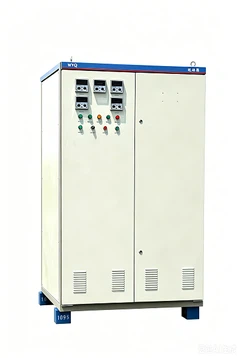
When you're a supplier of LV and MV panels, the last thing you want is a shipment arriving at a job site damaged-whether that's a scratch on a control panel door, a bent bus bar, or moisture seeping into internal circuitry. For years, I've learned that transporting these products isn't just about renting a truck and driving; it's a systematic process that balances engineering specifications, logistical constraints, and on-site readiness. Over thousands of deliveries, I've honed a protocol that minimizes risk, and today I'm breaking down how to transport LV and MV panels safely, step by step.
First, let's ground this in what makes these panels unique. Unlike standard cargo, LV and MV panels are customized electrical assemblies-enclosed metal structures housing circuit breakers, transformers, bus systems, and control wiring. Even minor damage can compromise insulation, shift internal components out of alignment, or create safety hazards during installation and operation. That's why the first critical step happens before the panel leaves our facility: pre-transport preparation tailored to the type of panel being shipped.
Not all LV and MV panels are the same, which is why I always start by verifying the exact product specs before packing. For example, if we're shipping a medium voltage metal clad switchgear unit (a type of panel designed for high-reliability applications in industrial or commercial settings), its modular design means individual components can shift if not secured properly. For medium switchgear, which often includes larger, bulkier enclosures, the packing method differs from compact LV panels used in office buildings. I've seen teams cut corners here: once, a customer received a compact LV panel with a bent main breaker because the team assumed it would fit in a standard crate without extra support. That mistake led to a 3-day delay and hundreds of dollars in rework-costs we absorbed, but lessons I never forgot.
To avoid that, I rely on a two-step pre-transport check: first, inspecting the panel at our warehouse for any pre-existing damage (like dents in the frame or loose wiring conduits) that needs documentation before shipping, and second, confirming the packing materials and methods match the panel's size and sensitivity. For most panels, we use heavy-duty, moisture-resistant crates lined with foam padding that's cut to fit the exact dimensions of each enclosure. For delicate components-like touchscreen displays on control panels or arc-resistant shields on MV units-I add custom-molded hard foam inserts to hold them in place, preventing any movement during transit. I also remove removable parts, like breaker handles or terminal covers, and pack them in labeled, sealed plastic bags affixed to the outside of the crate (never inside, where they can get lost or damaged).
Next, securing the panels for transport, whether by road, rail, or air. Road transport is the most common for our shipments, but it's also the highest risk for vibration and sudden stops. A friend in the trucking industry once told me that a semi-truck traveling at 60 mph generates 1.5 g-forces during normal braking-enough to shift an unsecured 1,000 lb MV panel and crack its internal bus bars. That's why we use rated steel tie-downs, not just rope or straps, when loading crates onto flatbeds or enclosed trucks. Each crate is secured to the truck's cargo anchors with at least four tie-downs, evenly spaced to distribute weight across the bottom of the crate (not just the top, which can cause it to tip). For longer hauls (over 500 miles), we also add vibration-damping pads between the crate and the truck's floor-these are heavy-duty rubber mats that absorb the repetitive jarring of highway driving.
If we're shipping via rail, the rules change slightly. Rail cars have tighter loading dimensions, so crates need to be sized to fit precisely, with no extra space that can cause shifting during rail yard switches. We also add additional bracing for rail shipments, since rail transport has a different vibration profile and more frequent sudden stops than road. For air transport, which we only use for urgent, time-sensitive orders, weight is a major factor-so we use lighter, reinforced wood crates instead of metal, and we work directly with air carriers that have experience transporting electrical equipment, ensuring the cargo is loaded in climate-controlled holds to protect against extreme temperatures.
Environmental protection is another non-negotiable part of safe transport. LV and MV panels are designed to operate in specific humidity and temperature ranges, and even temporary exposure to rain, snow, or condensation can cause rust, corrosion, or electrical short circuits. I've heard horror stories of panels arriving at a job site with visible rust on internal bus bars because the crate's moisture seal was damaged during loading in a rainstorm. To prevent that, every crate we build has a vapor barrier liner-heavy-duty plastic that seals the entire crate, with small desiccant packs (one for every 10 cubic feet of space) inside to absorb any moisture that gets trapped. We also avoid loading panels in open-bed trucks during bad weather; if a shipment has to be delivered in rain, we use a fully enclosed, waterproof truck and add tarps over the cargo area as an extra layer. For long ocean shipments, which we use for international orders, we add even more desiccant and use corrosion inhibitors on metal parts to handle the high humidity of ocean transit.
Another often-overlooked factor is labeling and documentation. Even the best packing and securing won't help if the driver doesn't know how to handle the cargo or if the receiver isn't aware of special instructions. Every crate has clear, high-visibility labels: "FRAGILE: ELECTRICAL EQUIPMENT," "DO NOT TIP," and "KEEP UPRIGHT" printed in bold, large text. For panels that contain hazardous materials (like SF6 gas in some MV units), we add the appropriate regulatory labels per local and international transport laws. We also provide a detailed packing slip for each shipment, which includes a list of components, serial numbers, and special handling notes-like "DO NOT use forklift forks to lift crates; use a lift gate with padded forks." Wait, that's another key point: loading and unloading procedures. Forklifts can easily damage a crate or the panel inside if not operated correctly. For all our shipments, we specify that forklift operators must use a lift gate with wide, padded forks that fit under the entire base of the crate, not just the edge. Lifting a crate by only one side can cause it to shift, damaging internal components or even tipping. I once had a delivery driver try to lift a crate with a standard forklift, which punctured the bottom of the crate and damaged a small control panel inside-costing us $2,000 in repairs. Since then, we've made it a point to train every driver we work with on how to properly handle our cargo, and we require them to inspect each crate before lifting.
Beyond physical transport, there's also pre-delivery communication that reduces risk. When a customer orders a panel, I follow up 48 hours before delivery to confirm the job site has a clear path for the truck, a loading area with enough space, and a team available to unload. We also advise customers not to open the crate until it's time to install, and to inspect the crate for any damage before signing off on delivery. If there's a dent in the crate or a tear in the moisture seal, we have the driver note it on the delivery receipt right away, so we can file a claim with the carrier before it's too late. One of our customers once skipped this step, signed for a shipment with a damaged crate, and then tried to return it 2 weeks later-only to find out internal components were damaged during transit. The carrier wouldn't cover the cost because the damage wasn't noted at delivery. That's why communication is just as important as the packing itself.


Now, let's tie this back to the products we supply. As a supplier of LV and MV panels, we work with a range of products-from compact LV panels for small commercial buildings to large medium voltage metal clad switchgear for power plants. The protocols I've outlined apply across the board, but I always adjust based on the specific product. If you're new to transporting these panels, I recommend starting with a clear understanding of your product's specifications, then working with a carrier that has experience handling electrical equipment. For more details on the types of panels we supply, including [Lv and Mv Panels], [Medium Voltage Metal Clad Switchgear], [Medium Switchgear], [Middle Voltage Switchgear], and [Medium Voltage Metal Enclosed Switchgear], you can review our product lines on our website.
Every time a shipment arrives at a job site without damage, it's a win-for our customer, for our team, and for the smooth progress of the project. Transporting LV and MV panels safely isn't just about following rules; it's about caring enough to protect a product that's critical to the work our customers do. If you're looking for reliable, undamaged LV and MV panels for your next project, feel free to reach out to our team to discuss your needs.
References
- International Electrotechnical Commission (IEC) 62271-1: High-voltage switchgear and controlgear – Part 1: Common specifications.
- National Electrical Manufacturers Association (NEMA) Standards for Packing, Shipping, and Handling of Electrical Equipment, 2021.
- OSHA Guidelines for Safe Transportation of Electrical Equipment, 2020.