


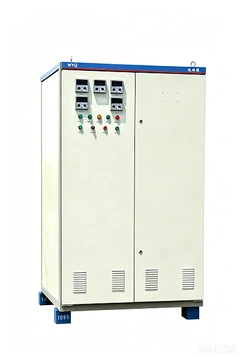
A motor soft starter (soft starter) is a novel motor control device that integrates soft starting, soft stopping, light-load energy saving, and various protection functions. It is known as a soft starter abroad. A soft starter uses three-phase, phase-parallel thyristors as a voltage regulator, connected between the power supply and the motor stator. This circuit is similar to a three-phase, fully controlled bridge rectifier. When a soft starter starts a motor, the thyristor output voltage gradually increases, gradually accelerating the motor until the thyristors are fully conductive. The motor then operates at its rated voltage, achieving a smooth start, reducing starting current and avoiding overcurrent tripping. When the motor reaches its rated speed, the starting process is complete, and the soft starter automatically replaces the completed thyristors with bypass contactors, providing the rated voltage for normal motor operation. This reduces heat loss in the thyristors, extends the soft starter's life, improves its efficiency, and protects the power grid from harmonic pollution. The soft starter also provides a soft stop function. The soft stop process is opposite to the soft start process. The voltage gradually decreases and the number of revolutions gradually drops to zero, avoiding the torque shock caused by free stop.
