


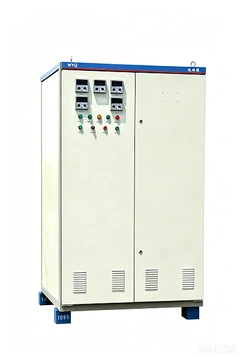
Regularly check the soft starter's environmental conditions to prevent operation beyond its permitted operating range. Check the area around the soft starter for objects that could obstruct ventilation and heat dissipation, ensuring adequate clearance (greater than 150 mm) around the soft starter.
Regularly check the power distribution terminals for looseness and any abnormalities in the cabinet components, such as overheating, discoloration, or a burning odor.
Regularly clean dust to prevent heat dissipation and damage to the thyristors due to excessive temperature rise. This also helps prevent leakage and short circuits caused by dust accumulation.
Dust can be removed with a dry brush, a blower, or a vacuum cleaner. Larger clumps of dirt can be removed with an insulating rod. If conditions permit, use compressed air at approximately 0.6 MPa.
Regularly monitor the fan's operation. If the fan speed is slow or abnormal, repair it promptly (such as removing grease and dust, adding lubricant, and replacing damaged or deteriorated capacitors). Damaged fans should be replaced promptly. Using a soft starter without a fan will damage the thyristors.
If the soft starter is used in a humid environment or one prone to condensation, it should be frequently dried with an infrared bulb or hair dryer to remove moisture and prevent leakage or short circuits.